

Having ventured to recommend 54 essential readings in Jewish history, I wanted to dedicate a list to Jewish women’s history specifically. My focus here is on history, as opposed to Jewish feminist thought or sociology, so expect historical writing, spanning antiquity to modernity. I’ve kept to books in English that are affordable and accessible, i.e., don’t require special access to an academic library.
Though such recommendation lists are always subjective, even idiosyncratic, I hope I’ve been reasonably comprehensive and representative of different approaches to constructing a history of Jewish women. And I hope you’ll comment with your own recommendations, suggestions, updates, and opinions. Some of these books are my old favorites, and others are on my reading list.
Table of Contents
- Historical Overviews
- Antiquity
- Medieval Period
- Early Modernity
- Modernity
- Historical First-Person Narratives
Historical Overviews

Rebecca Lynn Winer and Federica Francesconi, eds., Jewish Women’s History from Antiquity to the Present (Detroit, Michigan: Wayne State University Press, 2021).
This wide-ranging overview, the work of a group of leading scholars, is focused on lived experiences of ordinary women, including ritual, social, economic, and cultural. It also contextualizes the experiences of exceptional women within the constraints of their cultural conditions. This volume offers a window into the current research on Jewish women not only across time but also geographical regions, covering not Europe (Mediterranean, Western, Eastern), north Africa and the Middle East, and modern America and Israel. Happily, this book is now out in paperback and digital formats, making it still-pricey but more reasonable.

Judith R. Baskin, ed., Jewish Women in Historical Perspective, 2nd ed. (Detroit: Wayne State University Press, 1998).
Though older, this edited volume remains an important collection of essays laying out the groundwork for Jewish women’s history. It includes seminal articles by key scholars and covers an impressive span of time in approachable chapters.
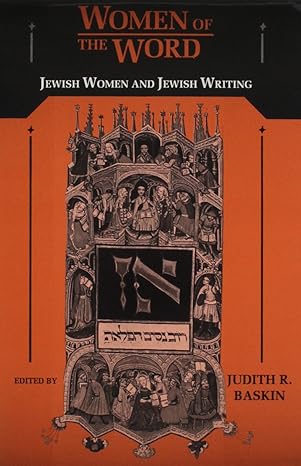
Judith R. Baskin, ed., Women of the Word: Jewish Women and Jewish Writing (Detroit: Wayne State University Press, 1994).
This early essay collection is wide-ranging, covering Jewish women’s literary output in a variety of languages and genres, from the medieval period to the twentieth century.
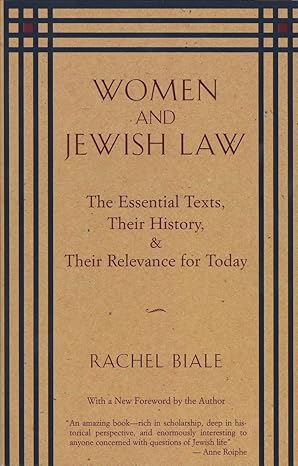
Rachel Biale, Women and Jewish Law: The Essential Texts, Their History, and Their Relevance for Today (New York: Schocken, 1984).
Though this work belongs more to the study of Jewish law than it does to Jewish history, the centrality of halacha to shaping Jewish life has important implications for Jewish women’s history. This book gives a classic overview for those unfamiliar with the subject.
Antiquity

Carol Meyers, Rediscovering Eve: Ancient Israelite Women in Context (Oxford and New York: Oxford University Press, 2012).
There are many interpretive and feminist books on the subject of Biblical Jewish women, but few histories of this remote past that take into account contemporary sources and archeology alongside Biblical texts. Carol Meyers’ book does an impressive and accessible job of doing just that. It opens up the worlds of not only exceptional women but also ordinary ones.
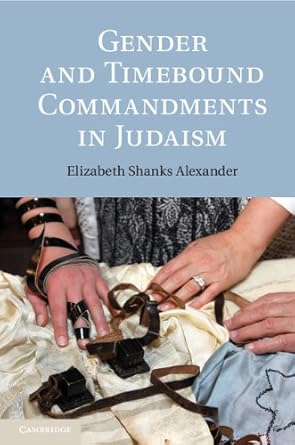
Elizabeth Shanks Alexander, Gender and Timebound Commandments in Judaism (Cambridge: Cambridge University Press, 2015).
This legally-focused examination of one of the central strictures delineating the status of Jewish women sheds much light on conceptions of women in the rabbinic period.
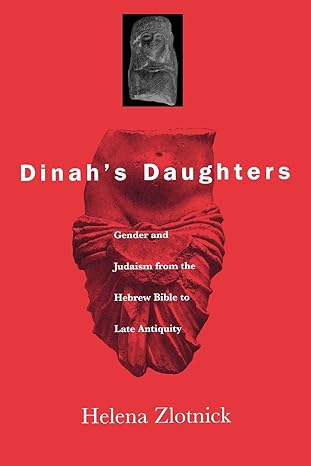
Helena Zlotnick, Dinah’s Daughters: Gender and Judaism from the Hebrew Bible to Late Antiquity (Philadelphia: University of Pennsylvania Press, 2002).
A thorough study of rabbinic attitudes as they relate to Biblical core texts, this book situates Jewish women in antiquity in their Mediterranean context, with references to Greek and Roman contemporary sources.
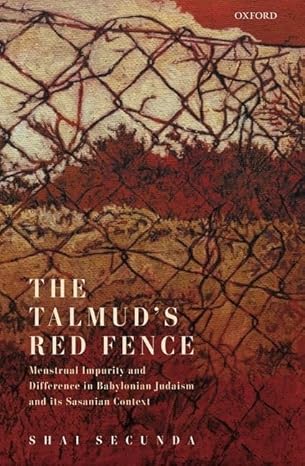
Shai Secunda, The Talmud’s Red Fence: Menstrual Impurity And Difference In Babylonian Judaism And Its Sasanian Context (New York: Oxford University Press, 2020).
This recent, much-needed text examines closely rabbinic menstrual purity laws and what they reveal of Jewish women in the classical rabbinic period, particularly in Babylonia.
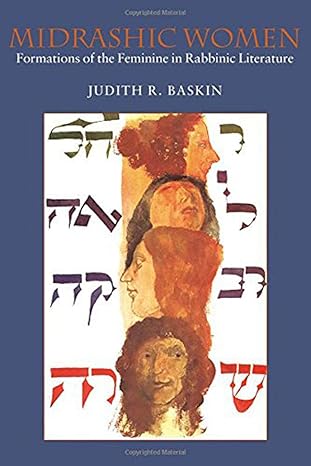
Judith R. Baskin, Midrashic Women: Formations of the Feminine in Rabbinic Literature (Hannover: Brandeis University Press, 2002).
Rather than examining how women are construed and addressed in rabbinic legal texts and in the halakhic context, Baskin here considers how they are portrayed in Midrash Aggada, the narrative portions of rabbinic literature.
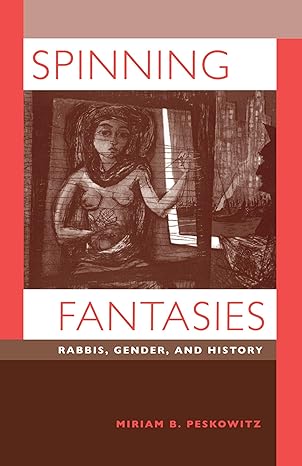
Miriam B. Peskowitz, Spinning Fantasies: Rabbis, Gender, and History (Berkeley: Universiyty of California Press, 1997).
Using a wide array of texts and archaeological findings, Peskowitz portrays the lives of Jewish women in the post-Second Temple rabbinic period. She pays special attention to everyday interactions as recorded in the sources, from which the title derives—spinning being one of those ubiquitous activities that is discussed in several crucial places in the Talmud.
Medieval Period
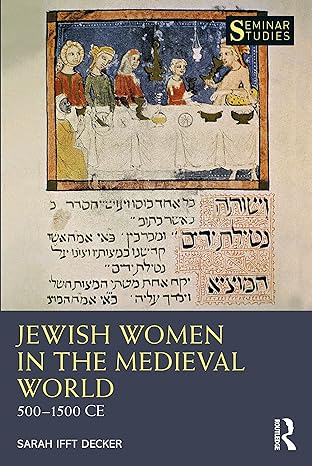
Sarah Ifft Decker, Jewish Women in the Medieval World: 500–1500 CE (London: Routledge, 2022).
This new reference work and topical history covers the lives of medieval Jewish women in both the Christian and Islamicate worlds. It’s a much-needed, thoughtfully organized volume with an impressive scope.
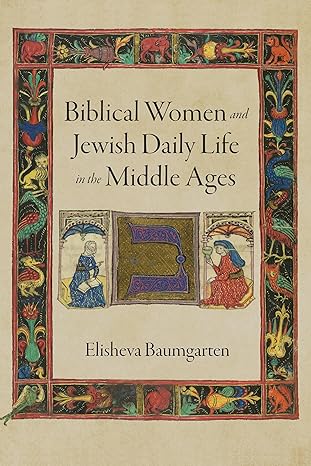
Elisheva Baumgarten, Biblical Women and Jewish Daily Life in the Middle Ages (Philadelphia: University of Pennsylvania Press, 2022)..
Taking a page from the Ashkenazi playbook, in which Biblical figures were related to as exemplars and archetypes, Baumgarten portrays the lives of medieval Ashkenazi women through the paradigms of their Biblical ancestors. Baumgarten is a masterful and sensitive hsitorian; her writing is always a treat.
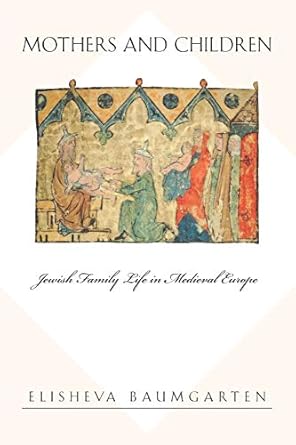
Elisheva Baumgarten, Mothers and Children: Jewish Family Life in Medieval Europe (Princeton: Princeton University Press, 2004)..
Another offering from Baumgarten, this book focuses on the experience of motherhood (and childhood) in medieval Ashkenaz. It illumines this significant dimension of medieval Jewish women’s lives, primarily using Hebrew textual sources.

Avraham Grossman, Pious and Rebellious: Jewish Women in Medieval Europe, trans. Jonathan Chipman (Waltham, Mass.: Brandeis University Press, 2004).
Grossman, the consummate scholar of medieval Ashkenaz, has throughout his works given attention to matters of women’s history. Here, he devotes an entire book to the subject, carefully examining what Hebrew sources can tell us about the sometimes-surprising lives of medieval Ashkenazi women.

Eve Krakowski, Coming of Age in Medieval Egypt: Female Adolescence, Jewish Law, and Ordinary Culture (Princeton: Princeton University Press, 2017.
Using the riches of the Cairo genizah, Krakowski illuminate adolescent Jewish girls’ lives in medieval Fatimid and Ayyubid Egypt, Krakowski. She weaves a narrative that powerfully opens up medieval mentalities in the Islamicate world and how they affected the lives of Jewish girls and women.
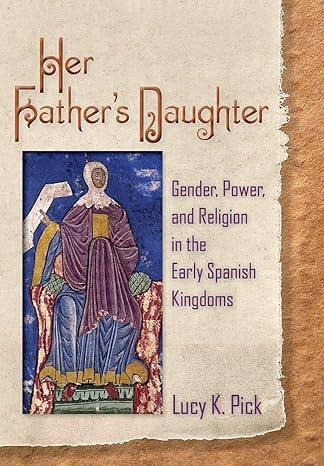
Lucy K. Pick, Her Father’s Daughter: Gender, Power, and Religion in the Early Spanish Kingdoms (Ithaca, N.Y.: Cornell University Press, 2017)..
Focusing on Jewish women’s history in the Christian kingdoms of Spain (with attention to earlier Visigothic foundations), Pick’s detailed study uses careful cases to pluck out larger themes of Sefardi women’s lives.

Sharon Faye Koren, Forsaken: The Menstruant in Medieval Jewish Mysticism (Hanover, N.H.: University Press of New England, 2011).
Though addressing specifically attitudes towards women on the part of medieval Kabbalists, this book treats a broader phenomenon in medieval Jewish beliefs that shaped women’s lives in the period. Its provocative conclusion offsets the creative exuberance of medieval mysticism with unfortunate misogyny.
Early Modernity
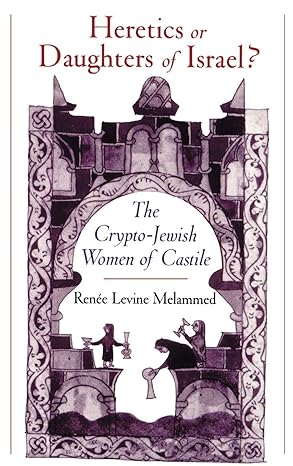
Renee Levine Melammed, Heretics or Daughters of Israel?: The Crypto-Jewish Women of Castile (New York: Oxford University Press, 1999).
The story of Converso women is told in this fascinating account, which considers the impact of gender on crypto-Judaism, a movement which affected thousands of Jews beginning with the mass riots of 1391-92. The author argues that women played unique roles in perpetuating secret Judaism under the threat of the state-sanctioned Inquisition.

Ada Rapoport-Albert, Women and the Messianic Heresy of Sabbatai Zevi, 1666-1816 (Littman Library of Jewish Civilization, 2015).
The rupture caused in early modernity by the messianic pretender Shabbetai Tzvi was profound; Rapoport-Albert tells the infamous story from the perspective of Jewish women, noting their roles and other gendered features of this traumatic societal event. (The list price of this book is the highest on this list, but used copies are usually available for more reasonable prices.)

Tirsah Levie Bernfeld et al., Sephardi Family Life in the Early Modern Diaspora, ed. Julia R. Lieberman, 1st edition (Brandeis University Press, 2010).
This book of essays concentrates on Jewish women, children, and family life in the Sefardi diaspora of the Ottoman Empire and in the Netherlands and northern Europe, after the Iberian expulsions.

ChaeRan Y. Freeze, Paula Hyman, and Antony Polonsky eds., Jewish Women in Eastern Europe [Polin: Studies in Polish Jewry, vol. 18] (Portland, Ore.: Littman Library of Jewish Civilization, 2005.
This special issue of the academic journal Polin is available to buy as a book, and covers a spectacular array of aspects of the lives of Jewish women in early modern and modern eastern Europe (not just Poland).

Edward Fram, My Dear Daughter: Rabbi Benjamin Slonik and the Education of Jewish Women in Sixteenth-Century Poland (Cincinnati: Hebrew Union College Press, 2007).
Although centered around the figure of Rabbi Slonik, this book is primarily interested in the subject of women’s education. Its sixteenth-century frame includes the new ways that printing influenced early modern Jewish women’s lives.

Chava Weissler, Voices of the Matriarchs: Listening to the Prayers of Early Modern Jewish Women (Boston: Beacon Press, 1999).
Through a close look at the texts of Jewish women’s prayers written in Yiddish, Weissler uncovers the spiritual lives of early modern Jewish women.
Modernity
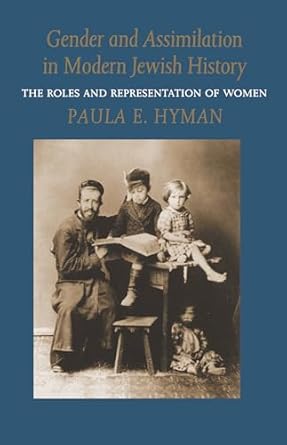
Paula E. Hyman, Gender and Assimilation in Modern Jewish History: The Roles and Representation of Women (Seattle: University of Washington Press, 1995).
.Examining both domestic and public roles taken by modern Jewish women in Europe and the United States, Hyman, a pioneering scholar of Jewish women’s history, shows how assimilation was a gendered process. In so doing, she sheds light on the process of modernization as it pertains to Jewish women.
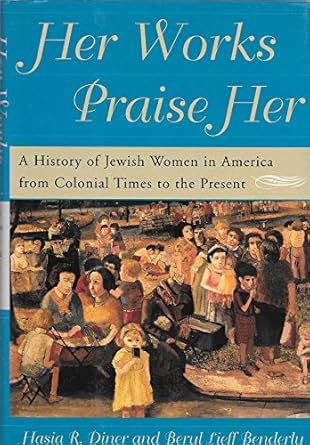
Hasia Diner and Beryl Benderly, Her Works Praise Her: A History Of Jewish Women In America From Colonial Times To The Present (New York: Basic Books, 2002).
A comprehensive narrative treatment, Her Works Praise Her proceeds chronologically, initially focusing on the Atlantic world, then the central European immigration movement, and then the eastern European immigration movement. After that, the book explores how Jewish women assimilated and contributed to American society.
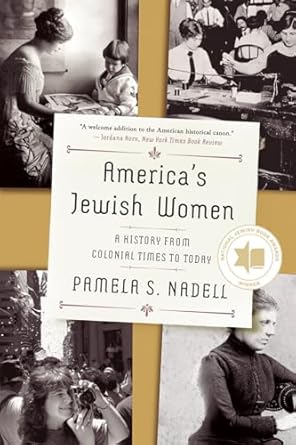
Pamela Nadell, America’s Jewish Women: A History from Colonial Times to Today (New York and London: W. W. Norton & Company, 2019).
Arranged in five chronological chapters, Nadell’s recent book tells the story of American Jewish women through the lives of prominent Jews. It focuses on Jewish women’s activities on behalf of society.
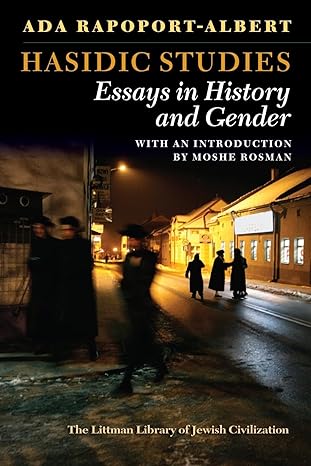
Ada Rapoport-Albert, Hasidic Studies: Essays in History and Gender (Oxford and Portland, Ore.: The Littman Library of Jewish Civilization/Liverpool University Press, 2018).
Though only the second half of this book deals with gender in the Hasidic movement, it is an outstanding treatment of this important topic. (And the first half is also extremely interesting and important, though not germane to our topic here.)

Nathaniel Deutsch, The Maiden of Ludmir: A Jewish Holy Woman and Her World (Berkley, Calif.: University of Californa Press, 2003).
Hannah Rochel Verbermacher, a nineteenth-century Hasidic woman, led an extraordinary life of spiritual leadership similar to that of male rebbes. This book tells her story, in the context of the Russian world she lived in. (This is another volume with a hefty price tag, but is somewhat more reasonable to buy used.)
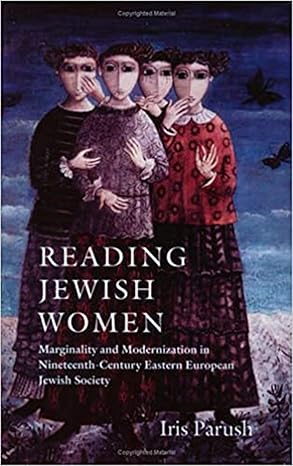
Iris Parush, Reading Jewish Women: Marginality and Modernization in Nineteenth-Century Eastern European Jewish Society (Waltham, Mass.: Brandeis University Press, 2004).
A study of literate women and women’s reading publics in the long nineteenth century in eastern Europe, this book argues that Jewish women had comparatively more freedom in selecting reading materials, which led them to be active in the Haskalah (Jewish Enlightenment) movement.

Naomi Seidman, Sarah Schenirer and the Bais Yaakov Movement: A Revolution in the Name of Tradition (Liverpool: The Littman Library of Jewish Civilization, 2024).
Perhaps no one did more for Jewish women’s religious education within the Jewish community than did Sarah Schenirer. Like the Maiden of Ludmir, this individual life also sheds light on the conditions of women’s lives, this time in the early twentieth century, a legacy that has continued into the twenty-first century.
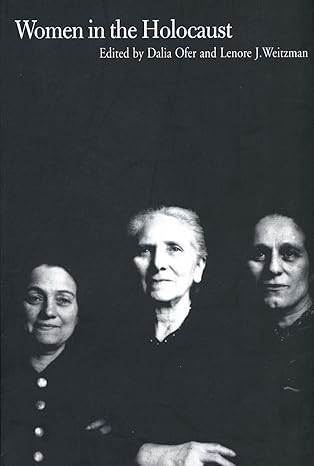
Dalia Ofer and Lenore J. Weitzman, eds., Women in the Holocaust (New Haven: Yale University Press, 1999).
This seminal volume examines the gendered differences in experience of the Shoah, including a panoramic view of multiple dimensions of women’s lives during the period, including a historical assessment of Jewish women’s status on the eve of World War II.
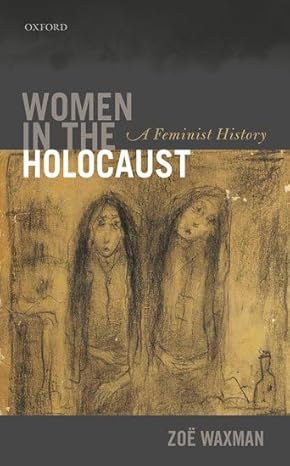
Zoe Waxman, Women in the Holocaust: A Feminist History (New York, and Oxford: Oxford University Press, 2017).
This more recent volume on the uniquely feminine experiences of Nazi persecution and genocide is written as a feminist history. It covers women’s experiences in the ghettos, in hiding, in concentration camps, and also after the war.
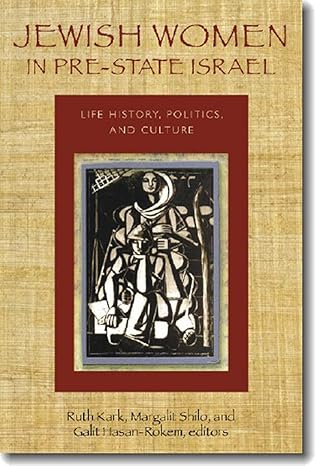
Ruth Kark, Margalit Shilo, and Galit Hasan-Rokem, eds., Jewish Women in Pre-State Israel: Life History, Politics, and Culture (Waltham, Mass. : Hanover N.H.: Brandeis University Press, 2008).
Though a notably brief period in the long history of Jewish women, the story of Jewish women in pre-state Israel is of tremendous significance, warranting, I think, the inclusion of this excellent book of essays on the subject.
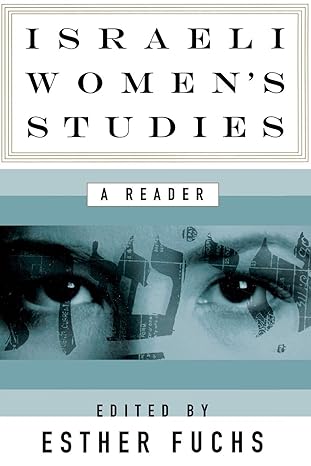
Esther Fuchs, ed., Israeli Women’s Studies: A Reader (New Brunswick, N.J: Rutgers University Press, 2005).
The coverage in this reader is thorough, including early pre-state history up until present debates. It is organized topically, and its eighteen essays (plus an introduction) give an excellent overview of work being done in the academy on Israeli women’s history.
Historical First-Person Narratives
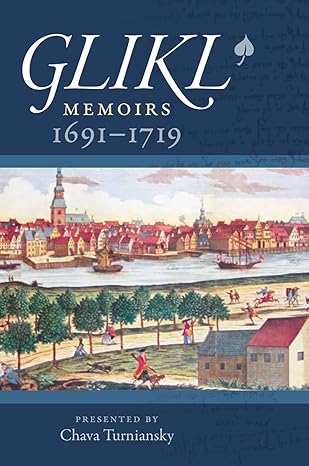
Glikl of Hameln, Glikl: Memoirs 1691-1719, ed. Chava Turniansky, trans. Sara Friedman (Waltham, Massachusetts: Brandeis University Press, 2019).
This early, one-of-a-kind first-person account of a middle-class woman’s life is a must-read. Not only is it an early example of an autobiography, it’s also a rare early modern testimony of women’s history written in a woman’s voice. Even in her self-report, Glikl is a complex character, not always relatable or likeable, but resourceful and full of life.
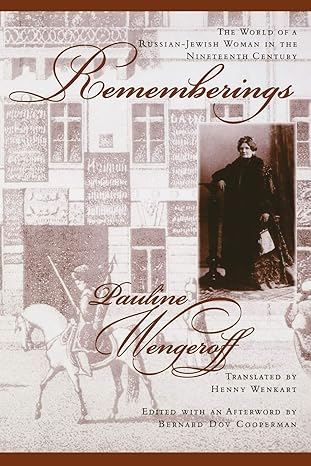
Pauline Wengeroff, Rememberings: The World of a Russian-Jewish Woman in the Nineteenth Century, ed. Henry Wenkert and Bernard Dov Cooperman (Potomac: Eisenbrauns, 2000).
A hidden gem, Wengeroff’s autobiography is absolutely fascinating, at times counterintuitive and quite moving. It also records a pivotal time period in Jewish women’s history, in one woman’s original words.
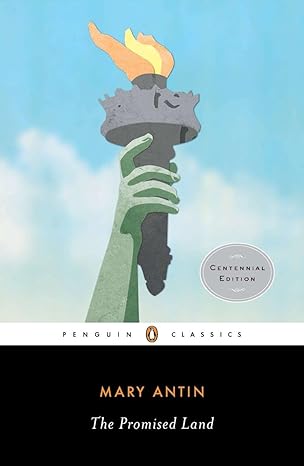
Mary Antin, The Promised Land, ed. Werner Sollors (East Rutherford: Penguin, 2012).
Antin’s The Promised Land is the quintessential account of the eastern European Jewish immigrant experience in the peak years of immigration to the United States. It is a deliberately historical, though personal, account and a self-consciously political one.
Bonus Section: Primary Source Anthologies
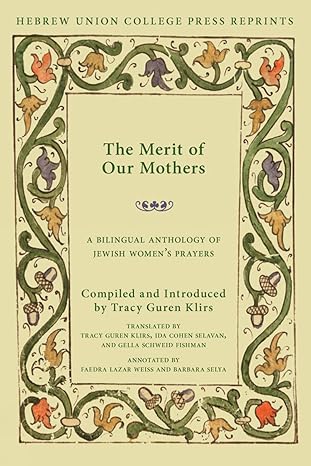
Tracy Guren Klirs, ed., The Merit of Our Mothers: A Bilingual Anthology of Jewish Women’s Prayers (Cincinnati: Hebrew Union College Press, 1992).
This annotated translation of Yiddish women’s prayer formulations serves as a record in English of this expression of women’s spirituality, largely lost along with the destruction of Yiddish culture during the Shoah.
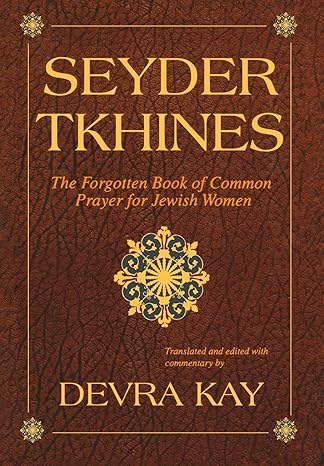
Devra Kay, Seyder Tkhines: The Forgotten Book of Common Prayer for Jewish Women (Philadelphia: Jewish Publication Society, 2004).
A newer edition of Yiddish tekhines (women’s prayers), this translation offers a more holistic look at this literature.
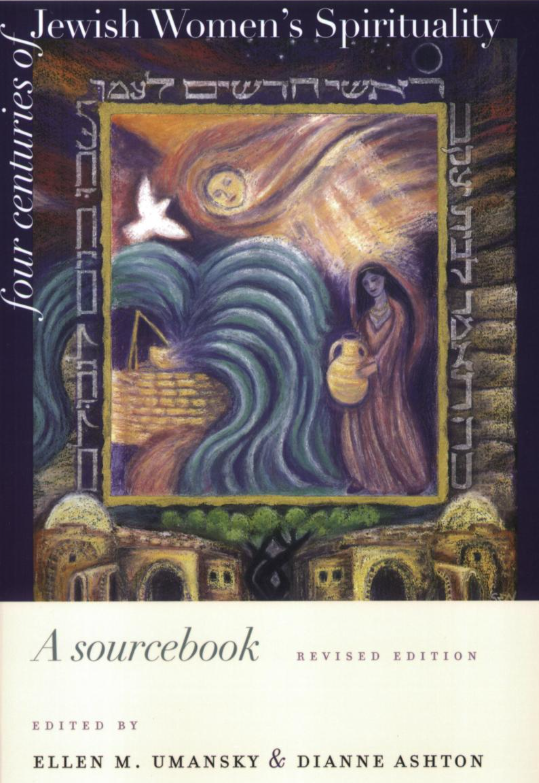
Ellen Umansky and Dianne Ashton, eds., Four Centuries of Jewish Women’s Spirituality: A Sourcebook (Boston, Mass: Beacon Press, 1992; rev. ed., Waltham, Mass.: Brandeis University Press, 2008).
Through a rich selection of texts beginning in the fourteenth century and ending in the twenty-first (in the revised edition), this volume depicts a variety of Jewish women’s historical experiences.


Leave a Reply