
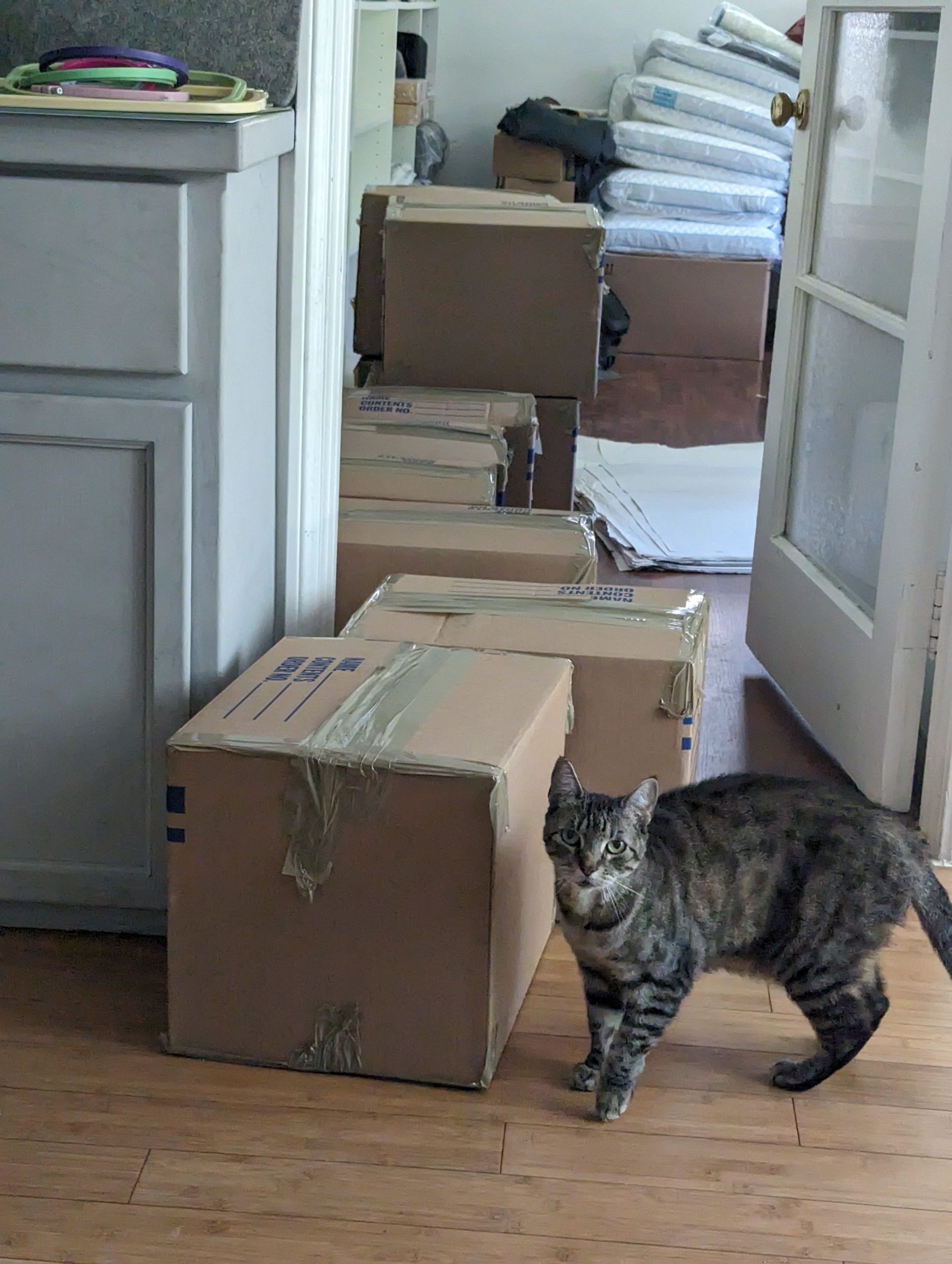
My family made aliyah in the summer of 2024 with kids from upper elementary through high school—and a cat—after several years of planning. In terms of specific how-to instructions for the application process and general tips on how schools and healthcare work, there’s lots of up-to-date info to be had on the Nefesh b’Nefesh website and in Facebook groups. Since the relevant information changes fast, it’s best to check current sites. However, I found that there was not a lot of helpful specifics on what to pack, how to organize an aliyah, how to transition and adjust, and basically how to go about setting up a life in Israel. I’m an Israeli-American-Israeli (my parents left Israel when I was young and I returned recently as an adult), but even being fluent in Hebrew and having spent lots of time in Israel, there were so many things that no one told me. So now I’m here to tell you!
Table of Contents
- Preparing and Packing
- Tips about the Aliyah Application
- Pre-Aliyah Financial Planning
- Sending a Lift: How it Works and What to Pack (and Not Pack)
- Planning for Last Days/First Days
- Bringing a Pet
- Hire an Apartment Broker
- The Deal with Hebrew (Start Now)
- Research and Select your Kupat Cholim
- Research and Select Schools (Have Backup Choices Ready)
- Research and Select a Bank, Credit Card, and Cellphone Provider
- Misc. Tips and Recommendations
- Arriving – First Steps
- 1 – Get an Israeli Cellphone
- 2 – Open a Bank Account and Bank Credit Card
- 3 – Deal with Anything Housing-Related that You need to Do
- 3 – Figure out Transportation
- 4 – Give Misrad haKlita your New Bank Account
- 5 – Get your Kupat Cholim Cards
- 6 – Register for Schools
- 7 – Purchase Major Appliances
- 8 – Create a Government Account and Make an Appointment to get your Biometric Teudat Zehut
- 9 – Change Over Utility Accounts
- 10 – Deal with Arnona (Municipal Tax)
- Getting Settled
- The Many Wonders of Wolt and Shufersal Online (Use them as your Amazon Prime Replacement)
- Download These Apps
- Getting Ready and Settled in School
- Picking an Ulpan
- Converting your Driver’s License
- Small Appliances
- Budgeting Software for your New Israeli Budget
- Getting your (Biometric) Israeli Passport
Preparing and Packing
Tips about the Aliyah Application
My big tip for the aliyah application is to make digital copies of all your personal documents before you even begin. Organize them on whatever hard drive you use so that it’s easy to produce whatever you need. If you don’t have all your documents yet (some you can’t get until you’re within 6 months of aliyah, like the FBI report), digitize them as they come in.
If you need apostilles, give yourself a long time to get them, up to 3 months for each. Start as early as you can. You will need an apostille for your FBI report (if you’re an Oleh Chadash aged 16 or older), and for this one, I recommend paying a facilitator to get it to you much faster than the standard wait time. It cost us about $150 and we got ours in about a week, and could proceed with our application. Our Nefesh b’Nefesh advisor recommended one to us.
You should also understand the difference between Nefesh b’Nefesh and the Jewish Agency if you are coming from North America. Nefesh b’Nefesh is warm and friendly and there to help you. The Jewish Agency is matter-of-fact and will ask you the hard questions (though I understand they are trying to be more sensitive in this regard). Once your file is passed along to the Jewish Agency, NBN can’t really help you; it’s all in the Jewish Agency’s hands. They are the final arbiters of your status and rights.
Pre-Aliyah Financial Planning
Okay, so this section is not going to be about your actual finances, like in dollar/shekel amounts. That’s obviously highly personal and specific to your individual situation. You already know that there are relatively large sums involved in an international move and setting up a new home basically from scratch in a new country. Rather, this section is about money logistics. For all things related to aliyah finances written by actual financial advisors, I warmly recommend Blue and White Finance.
Something to think about in general is how to handle money transfers between dollars and shekels. For most olim, you will not have money held in shekels available to you in Israel, and international money transfers, which involve currency exchanges, can include lots of fees and exchange rate losses. Especially since you will, at first and possibly for a while thereafter, need to transfer relatively large sums, the fees and exchange rate differences could be substantial. It is important to research the policies at your financial institutions. The first step is to inform your US bank that you are moving overseas and ask about their policies, fee structure, and procedures for transferring large amounts of dollars internationally. Plan for your spending to be split between dollars and shekels for a transition period of three months to a year or more.
I would also recommend that you consider opening a Revolut account and getting associated bank cards (they are Visa and work like debit cards, but run like credit cards as far as merchants are concerned) while in the US/Canada/UK. Revolut is a relatively new, well-reputed online international bank that deals very well with foreign currencies; lots of people use Revolut for travel purposes. You can very easily create a subaccount in a different currency, including NIS. But you can also freely pay for small or large sums from your USD/CAD/EU etc. account everywhere in Israel at a fair exchange rate with minimal to no fees. My kids also have handy Revolut child accounts, which unfortunately are available only in USD (they may also be available in select other currencies, but not in NIS). There are local alternatives for kids in Israel, however. (Many are limited to kids over 14. They are generally tied to a regular credit card that you need to get first. Isracard and Cal have debit cards for kids that is not age-limited right now.)
Another key recommendation is to open/have at least two American Visa or Mastercard credit cards with no international transaction fees and limitations. Not only will you need them for the week to two weeks it’ll take to get and activate your new Israeli credit cards (on which, see below), but also, your Israeli cards will probably have a lower credit limit than you’re used to initially—exactly when you have unusually high expenses. Not all places will accept a non-Israeli credit card, but most of them will. If asked for your TZ during a non-Israeli credit card transaction, just enter it even though it’s irrelevant and most of the time it’ll go through (Israeli credit cards are linked to your ID number, that’s why they ask). Here is why you need two: Murphy’s Law dictates that one of them will get stolen/hacked smack in the middle of your transition and you don’t want to be left without a high-credit-limit card that is accepted everywhere (ask me how I know…).
Another financial thing to do before aliyah is to research Israeli banks and decide which one you want to use, because you will need to open an account asap when you arrive. Know exactly which bank and which branch you want before you go; don’t leave the decision to after aliyah. There is a chicken-and-egg type financial problem that you will inevitably face when you arrive, in that you need to have money in Israel in order to do things like rent an apartment, but you can’t open a bank account until you are physically in Israel. You also cannot do an international transfer to an Israeli account before you establish/validate it in some way, and at our bank, we were first required to make a money transfer into it from an Israeli source. We couldn’t even deposit our Sal Klita cash into our account without doing so. If you don’t have any family or friends in Israel that can help, explain to your bank and see if they can offer any solutions.
Update: You may need your American credit report for financing in Israel as a recent immigrant. Download these while in the States, since you cannot do it from outside the country on any of the credit reporters’ sites or on the annual credit report site, not even with a VPN.
(All my tips about understanding Israeli banking and how it’s different from American banking is below in the post-aliyah section.)
Sending a Lift: How it Works and What to Pack (and Not Pack)
The logistics of moving your personal belongings to Israel involve contracting with an Israeli shipping company, who will then subcontract out the packing and unpacking portions of the job. That means that the people who show up at your house to take your stuff will be from a local company, and the same thing will apply to the people who show up in a truck to your new house in Israel. Meanwhile, you will be paying and dealing with a rep (possibly different ones on each side) from the shipping company you hired. In order to reserve the day of shipping, we needed to make a very small deposit. The rest of the payment was due at the time of delivery scheduling. We could not schedule our delivery date without paying in full, just so you have a heads-up. Our company, Sonigo, which we were very happy with, gave us the option of wiring the money either in USD from the US or in NIS from Israel. However, the money is paid in Israel so transferring in dollars will take longer and delay your delivery date by potentially a few days.
One of my absolute key tips about aliyah is to send your lift so that it arrives around the same time as you. Here is why: the last few months in your old home will be nuts anyway, you can live without your stuff for a few weeks to months. Then, you get your stuff when you arrive, and can feel at home and not need to buy tons of temporary items. Depending on where you’re located, the transit time for your belongings could be 4 to 10 weeks; your shipping company will be able to tell you. We moved from Los Angeles and were quoted 8-10 weeks. We sent our lift on April 15 and it arrived in Israel in early July, about two weeks before we did. (We got a tracking number and the details of the actual boat it was on and what ports it cleared.) We received our belongings shortly after moving into our apartment. Everyone had their favorite things and we settled in quickly, in time for the start of school.
At the time we moved (2024), all the shipping companies we talked to recommended we do a consolidated shipment, meaning that your things are palletized and shipped in the company’s 40′ container along with other people’s stuff, which is separately palletized. The reason for this was not the volume of things we were sending, but because customs was opening most private containers and that costs a huge amount of money in port fees. In our case, we didn’t have enough things to fill a private container anyway. An added bonus of a consolidated load is that with an exclusive container, you must be ready to receive it when it arrives, or you incur storage fees. Consolidated containers, at least for our shipping company, come with thirty days of free storage, so they are more flexible. This may change, but I would recommend the consolidated option in general.
In order for your shipment to be insured, the movers have to pack it. This, my friends, is an outright joy. You do not have to acquire or pack even one box, and they will do a better and faster job than you ever could. I had a team of three pack my house in LA and then a team of three unload the boxes in Israel, and gave each a big tip in cash. You will receive a detailed manifest with each box/package number and contents. When you receive your shipment, you will “play bingo” and mark off the boxes. Virtually nothing was broken or lost in our entire move.
There are heated opinions on what to bring and what not to bring on your lift. A lot of it is down to personal preference and needs. My general recommendation is to minimize/downsize/declutter as relentlessly as possible, but granted, I have strong minimalist tendencies. Here are the main decision areas as I experienced them, with my own recommendations:
- Furniture (mostly no): American furniture tends to be bigger, particularly wider and deeper, than the scale of Israeli homes. My general advice is: don’t bring it. In addition, and I also heard from a lot of people, is a strong recommendation not to bring low-quality furniture: it is as expensive to ship old Ikea stuff as it is to buy new Ikea stuff, if not more. One exception is new-in-box flat-pack furniture. I considered this option and decided against it, because at the time I sent my lift I did not have an apartment yet. If you know what home you’re moving into, this might make sense. Something that will be helpful for the bookish to know is that Israeli Ikea Billy bookcases are, paradoxically, deeper than the American ones (this is like the only exception, I swear). This is good for sifrei kodesh but not as good for trade books.
- Mattresses (no) and bedding (some): Again, they are different (metric) sizes in Israel; the Israeli single (what in America is called a twin) mattresses are somewhat narrower and longer. Israeli mattresses are scaled well for Israeli bedrooms and you will be able to buy appropriately-sized bedding for them here. There are many sizes available. I recommend 90x200cm for single mattresses and 160 for double, which is similar to a queen size. 140 is similar to full and 120 is “a bed and half,” just like what it says. There are also convenient folding mattress options here for guests. You can bring American blankets, though, which don’t have to be as particularly sized as fitted sheets. I brought all our blankets, both light blankets and down comforters. I also upgraded all our pillows and towels, getting a bunch from Costco, and put them on the lift. The only thing to be aware of here is that you will need to get your lift in order to have blankets, pillows, and towels (we were able to borrow from family).
- Personal electronics (yes): Things like laptops, PCs, cellphones, tablets, smart watches, electric toothbrushes, etc. These by and large come with 100-240v transformers (you can check the fine print on the transformer itself) so they just need an adapter plug to work in Israel. Make sure your phones are unlocked and check the model number to make sure they work with major Israeli cellphone providers (most do). You can also plan ahead and get items with USB plugs, which will work in Israel.
- Appliances (no): Large appliances, just don’t do it. They are different dimensions here and you won’t be able to get service, parts, or warranty coverage easily. Yeah, most dryers here are convection and not gas and they don’t dry the same way as high-heat gas dryers, but your laundry comes out just as fresh and clean. You will get used to doing smaller loads more frequently, I promise (I actually like it so much better, laundry is less of a slog). Large appliances here are also Shabbat-friendly out of the box. Buy here. Small appliances: some people invest in a good transformer box for about $150-$250 and use their American appliances, like stand mixers and food processors, in Israel. Lots of people I talked to told me anecdotally (I know, anecdata) that the motors still burn out fast, after a year or two. I decided not to bring mine and am very happy with that decision. There are great options here that don’t exist in the States. My Bosch mixer is much more functional than my former Kitchenaid, for example. You can buy extra parts from the official importer if you need, say, a parve bowl and dough hook, similar to in the US. And the transformer box doesn’t take up precious kitchen counter real estate. If there’s some kind of super specialty item that you use a lot, it might be worth buying in 220v and bringing on the lift. For example, I constantly use a rice cooker, so I bought a Japanese rice cooker designed for the EU (on American Amazon) and am very happy with that decision.
- Plug adapters (yes): Count the number of plug adapters you need for all your devices that will work on 220v, like computers, phones, tablets, Nests/Alexas and electric toothbrushes. (Remember, this is not the same as a transformer.) Double that number and order them from Amazon, even if it seems like a lot. When they arrive, divide them into two equal piles. One gets packed in your carryon bags. The other half gets plugged into your devices themselves before they get packed for the lift. This ensures that (a) when you open your boxes, your Nest/Alexa is ready to go and (b) when everyone is cranky when you finally get home after the airport and needs charge their device NOW, you open your carryon and hand each person an adapter for their device.
- Kitchen gear (yes): There is plenty of good-quality kitchenware in Israel, but it tends to be expensive. I’d bring all your good-quality stuff. I bid farewell to my cheapie Pesach dishes and replaced them with some new-in-box Corelle and Pyrex stuff for the lift. I think it’s worth upgrading before packing in this case.
- Personal items (some): Even though my minimalist instincts chafe at this, I ultimately think these are some of the most important items you’ll bring and worth the cost of shlepping/shipping, because they will make everyone feel at home. Decorations, memory boxes, photo albums, favorite toys, holiday items, and so on. My kids had fun picking out some new artwork for their new rooms, which we framed before they went on the lift, to add to their old favorites. However, bring the absolute bare minimum for each person to be happy, because everything is bigger in America, especially real estate. (And we lived in a little 1950s ranch in LA.)
- Books (some): Okay, I said it, you can only bring some of your books. Again, houses are just much smaller. Unless you have an extra room of some sort, there is often little to zero space for bookshelves in the common areas. Think of it as a challenge to distill your shelves down to the books you love and use the most. We brought one bookshelf of seforim, two of academic books/reference which my husband and I each use professionally, and one of kids’ books, cookbooks, and miscellaneous. This is actually the absolute maximum I’d recommend, and we even have an office area in our new home. Kill your darlings. I have a post on How to Be a Book-Loving Minimalist!
- Multipurpose organizers and storage bins (yes): These were among the most useful items I put on my lift. I couldn’t unpack them fast enough. Most of my containers I had already, but I also bought some drawer organizers and clear plastic bins that could be used for multiple purposes that worked out great. Pantry bins, various baskets, lidded boxes, all useful. I also bought a giant set of compact velvet hangers. Now we all match and putting away clothes was easy.
- Sukkah (no): I really debated on this one, so I’m here to tell you, nope. The Israeli models are better and easier to put together. Unless you have a kit that you love, don’t bring. We brought just our schach, but in retrospect I wouldn’t have, because it doesn’t quite fit the dimensions of our new sukkah.
- Consumables (no): This is another area that people have deep-seated feelings about: consumable items like Advil, Ziploc bags, your favorite toothpaste, and so on. Look, you’re not going to get your plastic bags and shampoo from America when you live in Israel, so just find new ones you like here. For those who like their products natural and fragrance free, you will find them here, not always as easily, but often quite easily all the same, and if not right away, then eventually. It’s not a bad idea to stick a large bottle of Advil in your suitcase when you fly; I just don’t think you need five of them.
Planning for Last Days/First Days
Once upon a time, I thought that my last weeks in America would be empty and breezy. Like, what was I going to do in an empty house with kids that weren’t in camp? Yeah, I was wrong. The last days and first days are both jam-packed, each in its own way. For the last days, consider:
- Where you are going to be sleeping the last few nights: We chose to stay in our house, since the closing date was shortly after our aliyah flight and we didn’t want to stress out our cat any more than necessary by bringing her to a relative’s home for the last few days. This meant that we needed to dispose of our last belongings that weren’t coming with us on the morning we left for the airport. Fortunately, our trash pickup day was the day after our flight, so we were able to order a bulk pickup and put all our old mattresses and bed things in a big pile at the curb.
- How you’re disposing of the last of your items: There are a surprisingly large number of things that come out of a supposedly empty house, including the last trash bags, so plan accordingly.
- Internet and other utilities: We had to turn off our internet several days before we made aliyah to avoid having to pay for a whole extra cycle we wouldn’t use. So we used a lot of data for those few days. Electricity, water, and gas were easier because we could choose a shutoff date (for when the new owners were moving in). I found we could set up the end dates a few weeks ahead, which helped make the last days a bit less hectic.
- Packing for the flight: Before we sent our lift, I packed one small to medium suitcase for each family member. We ended up adding several more suitcases/bags of random stuff, which drove me nuts but that’s reality. It felt like a ton to me and I apologized to the Nefesh b’Nefesh people profusely. They laughed and told me most family of our size bring 20+ bags and they arrange rides for everyone, no problem. I packed the “random stuff” bags first (it is very much like a game of tetris), our clothing suitcases next, the day before our flight, and finally, our carryon bags. I didn’t leave enough room for our last, dirty clothes and pajamas, or our toiletries, so we had to squeeze them in wherever they fit. It was a bit unnerving for me as a neat person, but hey, you’re only ever going to go on one aliyah flight! What I did was unpack everything once we arrived at our destination and organize the things that people needed. Then I repacked all the bags with stuff that we didn’t immediately need and tucked them in a storage closet. Moral of the story, your aliyah suitcases will probably be the messiest suitcases you’ll ever pack, but I’m not sure it’s entirely avoidable and everything will get there and be okay.
- Porting your phone number: If you are porting your phone number(s) to Google Voice so you can keep your American number for free, everything I read said that you have to start this process in the US. This is not exactly true, as we learned when we initially messed up the process and then successfully did it from Israel. What you need is to be able to get an SMS on an American number. Our US phone plan was Google Fi, which works internationally, so there was no need to port our numbers 24-48 hours before our flight as often recommended. In fact, it was much better to have Fi working until we got our Israeli SIMs. Porting your number means cancelling whatever plan you currently have, which makes no sense just as you need to let your parents know you landed safely, etc. etc. If you have a phone plan that allows you to get an SMS anywhere in the world, you do not need to port your number until you have an Israeli one.
- Access to a printer. Our old printer died a month or so before we moved. I thought this would be no problem (isn’t everything digital/app-based anyway?), but it turns out you actually need a printer for a lot of last things/first things, for example, printing the pet approval letter to import your pet to Israel. So if you won’t have a printer in the end, it helps to have someone nearby who can print important documents for you.
For the first days in Israel, consider:
- Where you’ll be staying: You need to have an Israeli address ready to provide before your aliyah date. More importantly, you have to go somewhere, and hotels are expensive. We were lucky and got pampered by family. Many people I know went with an AirBNB.
- What you’ll be sleeping on. If you didn’t bring your mattresses, you will want to order new ones right away, even if you’re with family/friends or accommodations, as they take some time to arrive (often three to six weeks). The fastest way to get mattresses that was found was Panda, and we were also very happy with their service, prices, and of course the mattresses themselves.
- What you need for Shabbat. See below on procuring things you definitely won’t have (like candles and a plata), but it helps to plan ahead as much as you can and not scramble. Putting candle holders in your packed luggage, for example.

Bringing a Pet
The process of bringing a pet was much easier than I expected, in no small part because our vet was familiar with the pet import process to Israel. (They give me an itemized printout of all the steps and costs six months prior.) Basically, your pet needs to have an internationally-readable microchip, get two rabies shots, a rabies titer, and a physical exam that gets signed off by your state’s USDA (in the US). The physical exam has to be within ten days, but no sooner than three days, before your flight, so schedule the vet appointment as soon as you confirm your aliyah flight. Once you get all the paperwork, you email it to an email address for Ben Gurion Airport and they will confirm and send you a final approval. You have to present this approval when you check in for your flight.
The El Al pet regulations listed on their website the week before our flight were not correct. We arrived with a carrier to meet their specifications, but which could not fit in the cabin. They had our pet listed as in cabin, so what happened was that they arranged an empty seat in the middle of our family for our cat. Normally, to go in cabin you need a soft carrier, is what we were told. If you are taking your pet in cabin, you will have to remove them from the carrier and walk them through security, so bring appropriate leashes/restraints for non-dog animals that don’t normally have them. You will also be hand checked after walking through the screener because you’re holding an animal.
When we arrived, we brought our cat to a kennel until we could move into our apartment. All things considered, she did well. She did cry during the second half of the flight, and she was pretty unnerved and miserable (and not eating or drinking) for a few days, which was not great. But she bounced back and seems to have forgiven us for the ordeal we put her through.
Hire an Apartment Broker
If you plan to rent at first (or in general), I recommend hiring an apartment broker several months before your move. You can ask for recommendations for the neighborhood you’ve selected in the city Facebook group. I found a wonderful broker that way, and she found us the perfect apartment two months before we arrived. Ask right away about payment arrangements if you need to transfer payments from outside of Israel.
The Deal with Hebrew (Start Now)
I am fluent in Hebrew. My husband is…not fluent in Hebrew. Everyone told him this would be no big deal, and maybe he would have had an easier time if he didn’t happen to be married to a Hebrew speaker (me), in which case lots of people (car salesmen, bankers, customer service of every stripe) just preferred to turn to me and speak in Hebrew. I myself am not sure how Olim who don’t know Hebrew do it! In short, he found it actually quite difficult to operate without Hebrew. We live in a neighborhood with tons of Anglos, but our local doctors don’t speak good English (they speak perfect Russian, though!). School portals, official communications, even filling up gas is tricky without Hebrew. Reading, writing, basic vocabulary, essential grammar will all help you. They will no doubt be inadequate, but will give you a head start and you’ll do the rest in an immersive environment.
Research and Select your Kupat Cholim
Shortly before you arrive, you’ll be asked which Kupat Cholim (medical group) you want to join. It’s not such a momentous choice, because you can switch if you want (as an Oleh, at any time, after the Oleh period, also relatively flexibly). People, including me, have opinions on which to go with, so ask people you trust. We wanted one of two kupot, and chose the one with both a family doctor and a pediatrician’s office in our neighborhood. Make sure you are registered correctly at Misrad haKlita at the airport (even though you are excited, exhausted, and overwhelmed all at once). You will have the opportunity to buy (low-cost) supplementary health insurance with additional benefits if you choose later on.
Research and Select Schools (Have Backup Choices Ready)
As soon as you have a permanent address, you can begin talking to the aliyah coordinator in your area about registering your kids for school. If you have an address while still outside of Israel, you can begin then. School registration in Israel is normally in January-February, so you will not have your pick of schools and you probably won’t get special consideration for being an Oleh if your chosen school is full. Have backups chosen in preparation that you can live with. Consider location vs. educational philosophy, and what year your child is in school: will they remain in their school for many years, or just one or two?
Research and Select a Bank, Credit Card, and Cellphone Provider
You will need to get these in quick succession once you land, so don’t defer the choice: research ahead of time and know what you want by the time you get to Israel. We went with major providers. There are less expensive options, but we preferred to be part of large, proven networks. If you expect to get a car soon, also research car insurance. You will need to get a drivers’ history from your previous car insurance for it, which is easier to take care of before you’re abroad.
Misc. Tips and Recommendations
Internet router planning: If you haven’t already, change the network name and password of your home router to something memorable (to you) that your whole family knows. When you set up your new internet, tell the tech to set the name and password to your old one and all your devices will “magically” connect immediately.
Password/account management: One of the things about moving, and especially moving internationally, is that you will need to enter and often to create tons of passwords, PINs, etc. I highly recommend, if you don’t have one already for your family, investing in a password manager (we use and like 1Password).
Get a VPN shortly before your aliyah date: If you want to continue your Netflix, Hulu, Disney+ etc. subscriptions with American content on them, then you need a VPN. It’s also useful for things like making purchases: some English Kindle titles, for reasons I have yet to understand, are only available “in” the US.
Keep Amazon Prime if you have it, at least for a while: The secret to using Amazon Prime global shipping is to make purchases that add up to between $49 and $75 (in USD). $49 is the threshold for eligible items to get free global shipping, which takes about two weeks to get to Israel generally, sometimes shorter. $75, meanwhile, is the maximum to escape customs regulations. To get eligible items, you’ll need to update your mailing address to your Israeli one (you can still keep a US address in your address book and ship to it). Then filter search results by “eligible for $49 free global shipping” and add at least $49 worth of stuff to your cart. Select items will only ship global priority, which is not free. I thought I would never use Amazon Prime in Israel, but I have found it quite valuable, especially in the setup period of making a new home. Of course, my family also uses Amazon Prime video, which makes Prime worth it for us. If we didn’t use Prime Video, I’d probably drop Prime after the first year here.
Get passport photos for everyone 16 and over in your group. You will need three, preferably identical (I could absolutely not get the answer to that question ahead of time and ours weren’t identical, but Misrad haKlita made do). For this you will likely need to purchase two pairs on the same day at CVS or similar, since US passport photos come in groups of two generally. These will be used for temporary Teudot Zehut. (Olim Chadashim will get them at the airport, and a Katin Chozer or Ezrach Oleh should bring them to their Teudat Zehut appointment so they can get their temporary one there on the spot; the biometric one takes 3-6 weeks to arrive via messenger.)
Arriving – First Steps

Ignore the “first steps” that NBN tells you about (I say this with love and gratitude, but they are wrong about this): these are your new first steps.
General advice
- Always take a ticket. Even/especially if you have an appointment. In any instance where there is queuing, like the bank, doctor’s office, pharmacy, deli, government office, municipality, you name it, find a machine, stick your Teudat Zehut in it, and get a number. Your appointment time doesn’t count, your number counts. As one clerk said to me when I pointedly mentioned the futility of appointment times, “What do you think this is, Switzerland?”
- Memorize your Teudat Zehut and, when you get it, your cellphone number. Immediately. If you can also memorize all your family members’, all the better. You will need to enter them many, many times in many, many circumstances, including ones where it seems irrelevant/outright weird that they are asking you for them.
- Make yourself a “bureaucracy kit.” Normally, it’s not a good idea to go around with your sensitive documents, like passports, in your bag when you’re not traveling. For the first month or so after aliyah, however, you will constantly need to have these kinds of documents with you, including when you didn’t expect it and when you forgot because you are doing eleven million things at once. I put our passports (US and Israeli), our temporary Teudot Zehut, our Teudat Oleh, and extra passport photos in a zippered pocket inside my bag. This served me extremely well.
1 – Get an Israeli Cellphone
Within an hour of arriving at your destination, before you even take a hot shower (not kidding), get on the phone with your chosen cellphone provider and open an account so you can schedule a messenger to deliver your SIMs as soon as humanly possible. This might soon be a moot point if more carriers here adopt eSIMs, but as of now (mid-2024), eSims are not really a thing. You cannot do anything (like truly anything at all) without an Israeli cellphone number. Yes, this is why Olim are given a temporary SIM when you land (though note: only an Oleh Chadash, not a Katin Chozer or an Ezrach Oleh). But do you really want to go back and officially change your phone number on your government accounts, bank records, etc.? No, you do not, especially as you’ll be thoroughly burned out from mountains of bureaucracy as it is.
2 – Open a Bank Account and Bank Credit Card
As soon as you get off the phone with your new cellphone provider, immediately go to your chosen bank’s website and make an appointment to see a banker at the branch of the bank closest to where you will be living. You do not need any sort of relationship with the bank to do this; anyone can schedule an appointment. Ignore all the popups that tell you you can open your account online; if you’re an Oleh Chadash, you cannot (sadly for the introverted). It will take approximately 45 minutes at the bank to open your account and you need your Teudat Oleh and Teudat Zehut (temporary is fine). (It’ll take longer if you’re a Katin Chozer or Ezrach Oleh, because then you won’t have a TZ and they won’t know what to do with you.)
When you get your new bank papers, you’ll want to make note of the following in particular (and enter them into your password manager if you have one):
- Bank code (there are relatively few Israeli bank and each has a two- or three-digit code used for bank transfers, though the name will usually suffice if you don’t remember this one)
- Snif (branch) number
- Account number
- User number (login ID)
- Online/app password
- Phone code
- IBAN (international) transfer code
At the same, initial bank appointment, you should apply for a bank credit card, preferably an Isracard or Mastercard (because they’re accepted everywhere), though Fly Card (which gets you El Al points) is currently AmEx only (despite what it says on the website), and that’s ultimately what we went for, because family in the States. Bank credit cards are a concept that doesn’t exactly exist in the US. It works like an ATM/debit card at an ATM but as a credit card in all other instances. Your balance will be automatically deducted from your checking account in full when it’s due (you’ll be given a selection of dates of the month for this transaction). You will also be able to split payments for almost everything, usually without interest, if you want, but the total sum due will count towards your credit limit. The actual amount you pay per month will be deducted from your credit limit each month. You can later also apply for a non-bank credit card that works more like an American credit card, if you want, but the bank ones are the “mainstream” option.
Before you go to your bank appointment, download your bank’s app. While the banker is doing various things, set up your new account on the app while you’re sitting there so you can get help if you need it. You can do a huge array of things via the app once you’re initially set up.
Don’t forget to being your form for Misrad haKlita and get it filled out and stamped by the bank.
Other things you maybe didn’t know about Israeli banks:
- You can order checkbook(s) at your initial appointment, which you will hardly use unless you are renting and your landlord wants checks. (If they accept a recurrent payment or a standing payment (horaat keva), you can do that through the app instead.)
- You can ask for your bank correspondence to be changed to English (our bank can’t send SMS messages in any language other than Hebrew, though).
- Direct bank payments are a common method of payment in Israel and are very easy to do via the app or online. If you have a bunch of cash sitting in your checking account but a low credit limit, bank transfers will work well for you. Larger transactions may be subject to banker approval.
- Another common procedure that you will be asked to do via the bank app is grant an authorization (harshaa) for a withdrawal. You can do this easily through the app/online. It’s slightly terrifying because you generally won’t be given a ceiling for what can be withdrawn (though you can specify one) but it’s nonetheless a common and innocent way of paying for low-cost (in Israel) things like Vaad Bayit (HOA) and supplementary health insurance.
3 – Deal with Anything Housing-Related that You need to Do
If you don’t have a permanent place to live, I would get on that the second you have a cellphone and bank account.
Again, I highly recommend sending your lift to arrive around the time that you do. If you have done this, immediately send the shipping company a copy of your Teudat Oleh after you get it because they need it to release your shipment from customs. (We weren’t told this and it caused a delay.) In the same email where you send them your Teudat Oleh, ask them the details of payment. You usually need to settle any payment before they will schedule a delivery date, so do this right away. Our company was happy to accept payment in USD or NIS, but because they are located in Israel, international transfers take much longer than a transfer from an Israeli bank. We had saved for this payment in dollars so that would have been good to know ahead of time.
Mattresses
If you haven’t shipped mattresses and you are moving into an empty apartment, you will have the challenge of procuring mattresses quickly. As with many things in Israel, mattresses can take weeks to arrive; they’re not necessarily in stock. The fastest company I found, as I mentioned, is Panda, whose mattresses have convenient delivery, good prices, and we really like them, too. They are on the soft side of the soft/firm divide but have just a bit of firmness to them.
Sheets
There are lots of good options for sheets, all available online for delivery, but you may have to go to a store to get them if you need them in less than 7 business days. A few options are Golf, Kitan, and Fox Home. In case you don’t know, sheet sets with a top and bottom sheet and pillow cases are a North American thing. There are no top sheets here. (Being an Israeli-American, I just donated all my top sheets in the States because I to this day have no idea what people do with them.) Sets will be fitted sheets and pillow cases. You can also buy each separately (including matching ones) a la carte. (You can also buy blankets, duvet covers, and towels at most stores that sell sheets, along with other housewares.)
Furniture
Whatever your furniture style and budget, have an idea of where you want to go to get basic furniture if you’re not bringing it. Look for furniture stores near where you’ll be living, so that they’ll deliver easily to you. The fastest and cheapest (and most familiar) will be Ikea. There are five Ikeas in Israel, three in the center, one in the north, and one in the south. Check what’s in stock the day that you go at the store(s) near you and know that if there are less than 5 in stock, you may not get one. You cannot pick the delivery day for Ikea furniture and you must be able to receive it at the time they give you, which is usually the next day or day after that.
Shabbat Stuff
You will need candles and matches and wine/grape juice. Matches you generally have to ask for at the counter, but candles, including havdala candles, and wine are available freely at supermarkets and small markets (as are cinnamon sticks for basic besamim). If you need things like candle holders and a challah board, there are Judaica shops literally everywhere, so you can just walk into one and get what you need. You can also buy a plata almost everywhere, like supermarkets and home centers.
3 – Figure out Transportation
Once you have a cellphone and a bank account and know what’s happening with your living situation, you can figure out what you’re doing for transportation. If you and your family fit into a single taxi (and don’t have a bunch of car seats), you will have more swing time to figure this out because you won’t have to take two taxis every time you want to leave the house. If this is not you, plan on renting a car until you can buy/lease one (which is super expensive; also, there aren’t car rental places everywhere). Depending on the walkability of your neighborhood, you may need only one car and not use it nearly as often as in the States (this is us), but personally we would have found it impossible to get things done without a vehicle.
Getting a vehicle quickly in Israel is not so simple. If you have the financing in place to lease a new car, it will take something like 3-4 weeks to get your car. You don’t just walk out of the dealership with one like in the States. If you want to use your Oleh tax benefit to purchase a new car, it will take 3-4 weeks to get the necessary tax approvals and release your vehicle.
The fastest way to get a car is to buy one used. It can be an enormous pain to do this from an individual (like through Yad2) right when you’re trying to get set up, so I recommend buying it from a used car lot, such as the ones that get the formerly leased and rental cars. Even so they will probably not have your car the same day. Ask directly if your car has been smoked in (again, ask me how I know), though I suspect the answer would have been “we have no idea.”
Android Auto/Apple Carplay is not nearly as common in Israeli models as in the States (even in same year models of identical cars). Often to use Waze you will need to get a SIM for your car (for a monthly cost). Even if you set it to English the streets will be in Hebrew (which was annoying to my spouse), so we opted to just get a good phone mount and use Google Maps/data on our phones for GPS.
4 – Give Misrad haKlita your New Bank Account
We were surprised to get a text a few days after we landed with our appointment time for Misrad haKlita in Jerusalem (not where we live). But we decided that it would be simpler to just show up instead of trying to reschedule for our very convenient local branch, so I don’t know if it’s possible. So we dragged ourselves to the center of Jerusalem, fought hard for parking, and spent 45 minutes trying to find the office. FYI the address of the Misrad haKlita in Jerusalem says it’s in an alleyway but it’s actually on the nearby street all the way behind and around the buildings. Which is a not nice thing to do to new Olim.
5 – Get your Kupat Cholim Cards
As a friend told me, Choleh Chadash is a thing (meaning your immune system has to adjust to a new environment and you’ll get every bug that comes by for a while). You do not want to be sick or run out of medication and also have to figure out medical bureaucracy. Once you are set up, just like with the bank, everything is easy. To get yourself set up for the first time, you need to go in person to your local kupat cholim in the health plan you’ve joined and initialize the process. You will leave with a card and your login. Do the initial login on the app on your phone in front of the secretary because you can run into problems and s/he may need to reset the process. Once your initial login is ironed out you can easily make appointments, get refills, etc. online or on the app. Adults have to be present but children do not, in order to get cards.
You also use your Kupat Cholim card at the pharmacy; they scan it and give you the medication immediately if they have it in stock. There’s no sending prescriptions like in the US or waiting for them to parcel out the medication. It’s usually prepackaged.
6 – Register for Schools
If you haven’t done this already, get in touch with the local aliyah coordinator or the municipality as soon as you have an address. Once you receive confirmation that your child have been registered to a school, call the school office (after about August 15) and make sure the school has received the registration and is processing it. You and your child (if older) will be added to the class WhatsApp groups, where all the information you need is to be had. You’ll probably get a welcome call from your child’s teacher and get invited to see the school and meet the teacher. My kids’ classmates wrote them the sweetest welcome messages, so use Google translate with them if you don’t do well yet with Hebrew!
7 – Purchase Major Appliances
You can’t get by for very long (well, happily and without a lot of cash) if you don’t have things like a refrigerator and a washing machine. Most rental apartments won’t come with major appliances included, so you’ll need to get them and have them delivered and installed fast. We were fortunate to have a family friend who sells appliances and arranged everything for us. If you don’t go through a store, you might need to arrange for delivery and installation separately. Each brand has an official installer, and that’s the company you need to talk to to get someone to actually hook up your oven, etc. Of course, you have to coordinate it so they appliance is delivered and sitting in your home by the time the installer comes. Sometimes the installation is included in the price you pay retail for the item, and sometimes it’s not and you’ll have to have cash ready for the installer.
8 – Create a Government Account and Make an Appointment to get your Biometric Teudat Zehut
Although there is an old English interface for creating your government account which is linked on NBN, I don’t recommend it. Instead, use the Hebrew one (use Google translate if you need it). Create a government account with your new telephone number and TZ at https://login.gov.il/. Make appointments of various kinds here: https://govisit.gov.il/he/home.
Once you have a login, make an appointment to get your biometric TZ. Theoretically you need to make separate appointments for each family member over 16, but in practice, just make one appointment, bring all your paperwork, and generally they will take care of everyone at that appointment. When you log on you will probably find that there are no appointments anytime soon or anywhere remotely near you. Here is the key: login in promptly at 8:00 in the morning, when new appointment times are released, as long as you’re prepared to go soon. I was able to get appointments at our local Misrad haPnim this way instead of driving 2 hours to get to one.
9 – Change Over Utility Accounts
I found this to be one of the biggest pain points of the whole move. You generally need to have the previous account holder’s information, often including personal information like ID number or user number, in order to move the account into your own name. You also need to know where the electric, gas, and water meters are for your specific apartment, something that no one involved with our apartment seemed to know. And finally, you need to figure out which provider services your unit. Be persistent, and in some cases you might have to wait for a bill to arrive in order to get the information about the previous account holder’s details. They do not turn off water or electricity in Israel so you don’t have to worry about that.
10 – Deal with Arnona (Municipal Tax)
For arnona (property tax, which is paid by tenants, whether renters or owners), we had to go to the arnona office at the municipality (not the same place as the municipality office) and fill out special forms and present the lease and oleh documentations to get the oleh chadash discount. It took a very long time to sort out, another major pain point.
Getting Settled
The Many Wonders of Wolt and Shufersal Online (Use them as your Amazon Prime Replacement)
It’s actually super easy and convenient to get things delivered in Israel once you’re all set up with accounts, addresses, credit cards, phone number, etc. However, few things arrive within 2 days, with three delightful exceptions: Shufersal grocery delivery, Wolt messenger service (similar to Doordash), and, good news for coffee lovers, Nespresso. (You can also buy classic Nespresso capsules at the supermarket if you can’t wait 24 hours, fyi; happens to the best of us.)
What’s key about Shufersal is that they have a large selection of housewares that are super useful to new immigrants. Need an extension cord? A toaster? School supplies? Shufersal has them, usually decent quality too. Think of it as a quasi-Target but with way more groceries. I almost never go grocery shopping anymore. There is a reasonable delivery fee.
Wolt is useful not only for takeout food, but also groceries, pet supplies, housewares, electronics, really almost anything you might need, and in a hurry. There is a reasonable delivery fee here as well. With Wolt and Shufersal, you can get 80% of what you need right away in an empty apartment.
Download These Apps
- The apps for your chosen bank and credit cards.
- Bit and Paybox, your new PayPal and Venmo.
- The app for your chosen Kupat Cholim.
- Moovit for public transportation (but wait to link it to your Israeli cellphone).
- Pango or Cello for parking payments, once you have a car (it’s linked to your license plate).
- Gett for taxis.
- Home Front Command and RedAlert for safety alerts.
- Shufersal, Wolt, and Yad2 for shopping.
- Morfix for translation (their app seems to have been booted off the app stores, but try downloading it from the web if you can’t find it; it’s the answer).
- Easy (that’s what it’s called) for looking up restaurants, stores, banks, etc. (it’s better than Google Maps in Israel).
- Everyone here uses Waze for GPS, but we still like Google Maps and that’s what we use. It works just as well in terms of simple searches, I find.
Getting Ready and Settled in School
School starts in Israel on September 1 and it was my goal to have the house in order by the beginning of school. I made it! This really helped us have a smooth start, though a teachers’ strike complicated things. Make sure to get in touch with the school office at each of your kids’ schools and check that they have been registered. You will probably get calls from their teachers, who you can ask about school clothing and supplies needed, plus get a schedule so you know what your kids’ week looks like. My kids were able to meet their teachers and tour their school before school started, which was great for getting through the first day with less nerves. They and I were also added to the class WhatsApp groups; my kids got the sweetest welcome messages from their new classmates.
Many schools in Israel require school T-shirts, and you can get these at common clothing store chains, which will iron on the school logo for you. (You can also order them online and iron on the logo yourself, if you have time to wait for the shirts to arrive.) I recommend getting two white ones, since these are worn on special occasions throughout the school year (including the first day of school, heads up.)
There’s a somewhat steep learning curve for how things work at Israeli schools: lots of things “everyone” knows that people will forget to tell you. Stop by the school office and inquire about paying for books; each school has a different way of doing it, though your kids probably won’t need books right away since they’re doing Oleh hours and learning Hebrew. Larger (but overall affordable) school payments are due here on November 1, and can be paid in multiple payments. Many schools use a parent/student portal called a Mashov that’s important to get access to so you can sign school permission slips, make teacher conference appointments, and monitor homework.
Picking an Ulpan
Larger cities, especially Tel Aviv and Jerusalem, have lots of ulpan choices. We are in a community known for attracting Anglo Olim, and there was really only one ulpan option, which my husband enrolled in. The learning style wasn’t ideal for him, but it was close by and we got to meet lots of great people who are our neighbors. So I would say, be open to going with what’s available. Registration is usually very relaxed. We didn’t realize that ulpan also starts one September 1 and my husband literally showed up on the first day and everything was fine.
Converting your Driver’s License
This is something that can be put off, since you’re allowed to drive on a foreign license for a year. I wanted to get it down with all the other startup bureaucracy items, but it just didn’t happen. If you take any prescription medications, you need a doctor’s letter explaining that each of them doesn’t negatively impact your ability to drive. You also need a driver’s record from your DMV and an eye exam. It’s a whole bunch of things to figure out, but will eventually get done.
Small Appliances
There are obviously tons of ways to get small appliances, including the Shufersal and Wolt options. If something isn’t pressing, you can comparison shop at zap.co.il and see what’s available in your price point. They also display online shops selling the item and their prices, including tax and shipping.
Small appliances that you need in Israel that you maybe didn’t need where you lived before are vacuums that wash floors. They are similar to steam mops but don’t get as hot. Most of these are separate from regular dust vacuums, but I found one by Dyson that both vacuums dust and mops (their “submarine model”). It was an investment piece, but so very worth it. You may also want to get space heaters, which look like little radiators and are very safe and energy efficient.
Budgeting Software for your New Israeli Budget
Most budgeting software in English will not work for NIS. If you’re looking for a good, free budgeting app for your finances in shekels I recommend MyFinanda. If you want a program that will work in multiple currencies (such as USD and NIS) I highly recommend Lunch Money. I looked high and low for a multi-currency program and this is it. Right now they do not support auto import from Israeli banks, so if your finances move quickly to NIS, go with MyFinanda, which does offer auto sync. However, the pain point of manually entering your NIS transactions in Lunch Money is balanced out by having an auto-converted full picture of your finances, including your net worth.
Getting your (Biometric) Israeli Passport
Right now, Olim Chadashim are eligible to receive a biometric passport after one year of Israeli residency. A Katin Chozer or Ezrach Oleh is eligible immediately (you cannot get a biometric passport at a consulate, only in Israel). In either case, you can request the passport by making an appointment through your government account. They will take your picture at the appointment, so you don’t need to bring one with you. Passport costs are lower in wintertime, so if you don’t plan to travel right away, you can wait until the lower-cost period (and there are more appointment times available too). Having a biometric passport makes it seamless to arrive in Ben Gurion. It’s not the end of the world to wait in the usually short line to have a human give you your exit pass, but it’s annoying when the machine does it in less than 10 seconds.
Okay, zehu, you’re done!


Leave a Reply