

New to Jewish learning? I was raised secular with just a little bit of Hebrew school, so I had to start nearly from scratch as an adult. I ended up with a Ph.D. in Jewish studies and learned full-time in yeshiva for four years. (You can read more about my story here.) I’m here to tell you it’s absolutely doable! Here is what I would recommend for someone just starting out, even if you’re a beginner with no background knowledge and don’t read Hebrew.
Table of Contents
- The Structure of Jewish Learning
- Where to Begin?
- Introductory Books in English
- Text Reading Recommendations
- Advancing Beyond the Basics
The Structure of Jewish Learning
Wondering what the “syllabus” of Judaism is like? I like to divide Jewish learning into four major areas that echo traditional divisions:
- Written Torah (תורב שבכתב) – meaning the Tanakh (an acronym for the three divisions of Torah, Neviim, Ketuvim, a.k.a. Hebrew Bible)1 and its commentaries;
- Oral Torah (תודה שבעל פה) – rabbinic literature, most importantly the Talmud Bavli2 and its commentaries, but also the Talmud Yerushalmi and Midrash collections, both halachic (legal) and aggadic (narrative);3
- Halacha – works dealing specifically with law, especially law codes4, including topics such as kashrut (laws of kosher food), Shabbat and holidays, and family law;
- Machshava – Jewish thought, encompassing both rationalism (philosophy and musar, ethics) and mysticism (Kabbalah and Hasidism).
To this you might add a fifth area, tefillah, which is the content, context, and cycle of prayer and liturgy, if you’re not familiar with it. The nusach (form) of the prayer is sort of a prerequisite to Jewish learning but not really a subject; it is performed rather than studied in yeshiva settings, for the most part. If you enjoy poetry, you may want to eventually explore the rich tradition of piyut (liturgical poetry).
The mainstay of traditional Jewish learning are areas two and three, Talmud and halacha. There are, of course, many schools of traditional Jewish learning, with some emphasizing aspects of areas one (Religious Zionism, to some extent) or four (many schools of Hasidut, though Hasidut has a unique and non-systematic approach to machshava).
Where to Begin?
I always recommend starting with what interests you. Curious about how the Talmud works? Start with Oral Torah. Fascinated by free will or the problem of evil? Start with Machshava.
However, if you are not drawn to any particular area, I would recommend starting with the Written Torah (Tanakh, also called Mikra).5 It has an enormous amount of resources devoted to it and most are now available for free online in good editions with English translations. (See below for links.)
I also created study guides for each of the weekly Torah portions:
Introductory Books in English
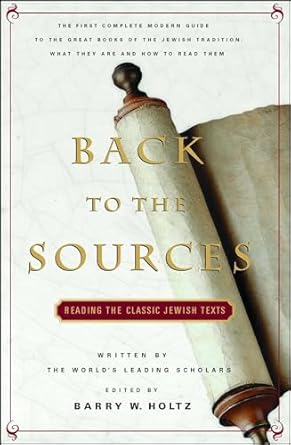
Barry W. Holtz, Back to the Sources: Reading the Classic Jewish Texts (Simon and Schuster, 1986)
Barry Holtz’s Back to the Sources is an indispensable guide through classic Jewish texts. It’s organized according to major genres: . If you’re not sure with which subject area to start, Back to the Sources will introduce you to the central subjects and concerns of each genre. It’s how I figured out I was interested in the thought of Rambam and Ralbag, and all these years later, it’s still true.
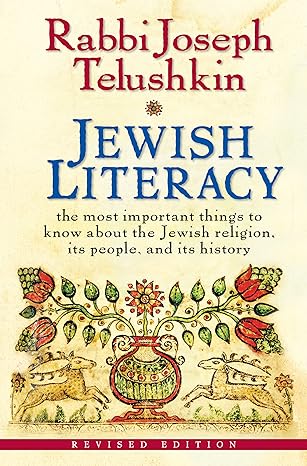
Joseph Telushkin, Jewish Literacy (William Morrow, 1991; rev. ed., 2008)
Readable and well-organized, this comprehensive (though not exhaustive) reference serves as an ample guide through major texts and concepts in Judaism and Jewish history. Telushkin is not everyone’s cup of tea, but no other work like this exists in English.
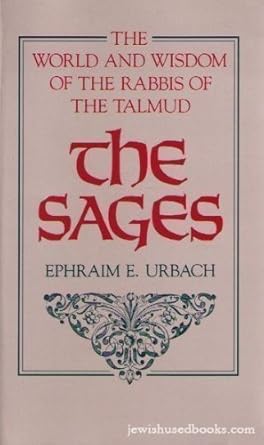
Ephraim E. Urbach, The Sages (Harvard University Press, 1989)
E. E. Urbach, one of the great Israeli scholars of rabbinics, originally wrote this massive volume in Hebrew; the English translation is very good as well. The importance of this book as an introduction is its explanation of the foundational concepts that underlie Jewish though and all classical texts. This is an especially impressive feat because rabbinic thought is non-systematic, in contrast to, say, Aristotle. Urbach masterfully gathers up all the pieces and arranges them for you by theme.
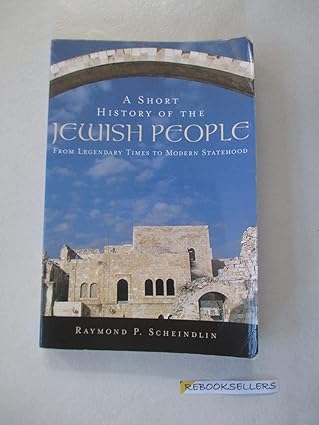
Raymond P. Scheindlin, A Short History of the Jewish People: From Legendary Times to Modern Statehood (Oxford University Press, 2000)
There are other short histories of Jews and Judaism out there, but this one is my favorite, not only because the author was my teacher and mentor. What I like about it, apart from engaging writing, is the cogent, chronological organization. Other short introduction are thematic, which I find a bit chaotic/confusing, and less helpful for looking up topics you’re interested in or need to review. For a longer introduction, I recommend Martin Goodman’s A History of Judaism.
For recommended reference books specifically on Talmud, see my post on How to Start Learning Talmud.
Text Reading Recommendations
Written Torah
The Tanakh/Bible occupies an unusual place within the Jewish canon: it’s extraordinarily holy and forms the basis for everything, and yet is not much studied in itself: it’s the Talmud Bavli that occupies the most space on the Jewish booksheld, literally and figuratively. However, if you are new to Jewish learning, you can’t do better than to start with a close reading of the Torah, the first five books of the Bible. Here’s a quick rundown of their major topics:
- Bereshit (Genesis): narratives from the Creation through the Avot (Patriarchs), Avraham, Yitzchak (Isaac), Yaakov (Jacob) and his twelve sons (progenitors of the Twelve Tribes of Israel), as well as the Imahot (Matriarchs), Sarah, Rivka (Rebecca), Rachel, and Leah.
- Exodus (Shemot): the Jewish people’s enslavement in and escape from Egypt, plus the giving of the Torah.
- Vayikra (Leviticus): ritual laws, the building of the Mishkan (Tabernacle, a portable desert sanctuary).
- Bamidbar (Numbers): the experiences of the Jewish people during their forty years of wandering in the desert en route to the Promised Land.
- Devarim (Deuteronomy): Moshe’s (Moses’) long, last speech to the Jewish people before his death and before their crossing into the Land, which also serves as a restatement of the events they’re experienced and of the laws they have been given.
You can read the Torah on Sefaria here or, if you read Hebrew, I recommend Al HaTorah (it allows you to toggle on English, but is more Hebrew-centric). On Sefaria, you can choose from many translations into English and other languages by clicking on the translation name in the top bar. JPS is a good, standard translation, and I like Koren as well. If a verse is confusing or intriguing, it can be a good idea to check how others translate it.
My recommendation is to read the Torah along with the commentary of Rashi. This classic commentary represents something close to the “standard,” traditional understanding of the Torah text, based as it is upon rabbinic sources. Rashi’s commentary, which is translated into English on Sefaria, goes line by line, but I wouldn’t try to start by reading it on each and every verse. Instead, I recommend reading the Rashi where a verse piques your interest somehow: you’re curious about it, have difficulty understanding, spot what appears to be an inconsistency, or are otherwise bothered by it. To read the Rashi along with the Torah on Sefaria, click on a verse to open the sidebar. In the sidebar, choose Commentaries > Rashi.
If you are looking for purchase a print copy of Tanakh, I recommend the Koren bilingual Magerman edition or the JPS bilingual edition.
What happens when you finish the Torah? Of course, you could keep going right through with Neviim (Prophets), picking up where the Torah left off with the Book of Yehoshua (Joshua) and right on through the tumultuous period leading up the first kings of Israel. This is my favorite way to proceed, because I like chronology. However, the Prophets past the Book of Kings don’t make such easy reads. They are poetry as well as prophecy, and contain challenging language. If you’re not up for reading the whole Bible straight through, I recommend jumping to the Five Megillot (Scrolls) in the Ketuvim (Writings) section. Each is read on different occasions over the course of the Jewish year, and represents a core text in the canon. I’d read the Megillot in the following order:
- Esther: read on Purim, this scroll tells the story of the Jews of ancient Persia and the genocidal plot against them that is thwarted by Queen Esther and her uncle or cousin, Mordechai.
- Kohelet (Ecclesiastes): this scroll, traditionally ascribed to the wise Shlomo haMelech (King Solomon), will give you a taste of (some of the most radical) of the Tanakh’s wisdom literature. It is read during the fall holiday of Sukkot.
- Eicha (Lamentations): because it tells the sad story of the destruction of the first Jerusalem Temple and the subsequent Babylonian exile, this scroll is read on the mournful fast of Tisha be-Av, which takes place during the summer on the day that marks the Churban (destruction) of both the first and second Beit ha-Mikdash.
- Ruth: this scroll tells the the emblematic story of Ruth, who converted to Judaism out of love for her mother-in-law, Naomi, becoming the ancestor of the future David haMelech (King David) and thus also Mashiach (the messiah).
- Shir ha-Shirim (Song of Songs): possibly the most challenging, and also alluring, of the Five Megillot, Shir ha-Shirim is a deep and searing love poem, traditionally understood as an allegory of the love between the Jewish people and G-d.
After the Megillot, you may want to progress to the three books of the Ketuvim known by their Hebrew acronym of Sifrei Emet, which also, conveniently, means “books of truth”: Iyov (Job), Mishlei (Proverbs), and Tehillim (Pslams). Tehillim in particular is the crucial “first prayerbook” of the Jewish people; it, along with Mishlei, is very frequently quoted. Iyov represents the Tanakh’s perhaps most direct dealing with theology, here the problem of evil and suffering.
Another option is simply to pick your interest area with Tanakh (such as history or poetry) and read selected books. If you want to expand your understanding of particular books of Tanakh, the Maggid series on Tanakh makes great companions.
Traditionally, the Torah is read in cycles; the most common one nowadays is an annual cycle. It’s very much intended to be a regular, repeat read. Whenever you’re ready to tackle it again, pick a new commentary to read along with it. After Rashi, I recommend Ibn Ezra (for something completely different) and then Ramban (wordy, brilliant, and vital). You can find the traditional omnibus of commentators in English translation in Artscroll’s Czuker Edition Mikraot Gedolot.
Oral Torah
Though it’s tempting to jump straight into the Talmud, I recommend starting with Mishna. Mishna is what scholars call apodictic, meaning it contains short, direct statements of what the law actually is, unlike the Talmud, which gets into complex, many-layered discursive (back-and-forth) discussions about the reasoning behind the Mishna, or its application to various cases. By contrast, the Mishna is much easier and more manageable to read, and gives you a great basis for learning Talmud later.
You can begin anywhere the inspires your interest, but I do think that the very first Masechet (tractate), Berachot (Blessings), is a great place to start. The subject of Masechet Berachot is basic prayers and blessings, and both the Mishna and the Gemara are wonderful introductions to the way the rabbis thought. After that, I would recommend working through Seder Moed, the second division of the Oral Law, which deals with Shabbat and holidays, or Seder Nezikin, the division that deals with torts and criminal law, especially the first three tractates, known as the “Three Gates,” in Aramaic, Bava Kama, Bava Metzia, and Bava Batra.
An outstandingly clear commentary on the Mishna is the modern Kehati, which has been translated fully into English and is freely accessible through the Kehati app (Android | Apple). There are also printed editions of Kehati in both Hebrew and English translation.
Once you’ve finished a chapter of Mishna Berachot, you can move to the Talmud on it. English translations of the Talmud generally have Rashi’s commentary on it interpolated (inserted into) the text, usually with the word-for-word translation bolded and the interpolations in regular font. (Yep, Rashi also wrote an incredibly important commentary on the Talmud; he was a powerhouse). You can find the entire Talmud freely available online with translation on Sefaria, Al HaTorah, or Mercava. There are also line-by-line English translations, with lots of learning aids, available in print from Koren (Noé Edition) and Artscroll (Schottenstein Edition).
Talmud is most often referred to by its folio page number (according to the standard Vilna printing of the late nineteenth century). A folio page (daf, plural dapim) refers to the front (“a” side) of the page as well as its back (the “b” side of the page). Many people like to learn one folio page a day in a standardized learning program called Daf Yomi (“the daily page”). Personally, however, I find this arbitrary and like reading the Gemara on each Mishna as a unit, if I can.
There is lots more to be said about getting started with Talmud learning, which I wrote a whole post about here:
Halacha
This is perhaps the trickiest area for beginners, because halachic literature generally assumes a lot of prior knowledge of both the underlying theory and method of Jewish law. That being said, two of the most important codes of Jewish law are lucid and compact: Rambam (Maimonides’) Mishneh Torah from the twelfth century and R. Yosef Karo’s Shulchan Aruch from the sixteenth century.
Though it’s later in history, I would start with the Shulchan Aruch because it’s the regnant, normative code through the twenty-first century. You can begin with its iconic opening, then proceed to whichever area of the law interests you. The Shulchan Aruch is arranged following the organization of an earlier, fourteenth-century code called the Arbaa Turim, “The Four Pillars.” These pillars describe the quadripartite division of the work into four major areas:
- Orach Chayim: this section follows the order of the standard day and year of the average Jewish male, from awakening in the morning through going to sleep, with the cycle of holidays (including Shabbat) as well. (One of my teachers, Rabbanit Michal Tikochinsky, is writing a Shulchan Aruch that follows the day of the typical Jewish woman! It’s forthcoming.)
- Yoreh Deah: this section covers ritual laws that pertain to everyday life which were not covered in the previous section, especially the laws of Kashrut (kosher food) and and Niddah (family purity laws). Standard Orthodox rabbinic ordination is called Yoreh Yoreh because it covers topics contained in the first two books of the Shulchan Aruch.
- Even ha-Ezer: this section covers family law.
- Choshen Mishpat: this section covers civil law. These last two sections are studied by Orthodox Jewish dayanim (rabbinical court justices) and are considered more advanced material.
It’s also important to know that the Shulchan Aruch is a condensed version of a much longer work by the same author, called the Beit Yosef. The Beit Yosef goes into detail about the sources and reasoning behind each ruling presented in the Shulchan Aruch.
You’ll notice that most sections of the Shulchan Aruch contain comments, which are set apart by text size on Sefaria or color (red) on Al HaTorah. R. Yosef Karo was Sefardi, so the comments, made by his contemporary the Rema (R. Moshe Isserles), bring the Ashkenazi halachic tradition into the compendium. This allowed the Shulchan Aruch to serve as the guidebook for both Sefardi and Ashkenazi Jews, and so, to become universally adopted.
After you’ve explored a few topics in Shulchan Aruch and familiarized yourself with its layout, you can proceed to Mishneh Torah. To start with Mishneh Torah, I don’t recommend reading straight through, as the first two books (of fourteen total) are highly theological. They are fascinating and important, but I’d hold off and read them later, after you’ve gotten a taste of Rambam’s method and style in halacha. Instead, start with Rambam’s introduction, then proceed to one of the holiday sections, whichever interests you most.
Machshava
Judaism has two basic branches of thought, philosophy, which is rationalist, and Kabbalah, which is non-rationalist. More classic works of philosophy have been translated into English than Kabbalistic works. Both are challenging and have their own terminology and language use, but Kabbalah, as an esoteric field, is harder to understand (or translate) for contemporary Western readers.
Philosophy
In philosophy, arguably the most important text is Rambam’s Moreh ha-Nevuchim (Guide of the Perplexed), and you’d do well to start with it. There is a new, annotated English translation by Lenn E. Goodman and Phillip I. Lieberman, and Friedlander’s serviceable translation is available freely on Sefaria. Shlomo Pines’ translation (vol. 1 and vol. 2) is most often used in academic contexts, but has its own difficulties. To the Moreh, you should add Rambam’s statement of the Thirteen Principles of Judaism in his Introduction to Perek Chelek, a chapter of the Mishna in Sanhedrin that deals with the subject. The Shemona Perakim (Eight Chapters) on Prikei Avot, an ethical tractate of the Mishna, also contains Rambam’s basic ideas. (He wrote them as part of his Commentary on the Mishna; for a print copy including both the Shemona Perakim and the Thirteen Principles, see here.)
After the Moreh, you can go back and understand Rambam’s progenitors. The first major work of Jewish philosophy was Rav Saadia Gaon’s Sefer Emunot ve-Deot (The Book of Beliefs and Opinions), which is neatly divided into ten books and seeks to explain rationally the foundations of Jewish belief. If you’re looking for a print version, there is a great translation published by Yale University Press. Though Rambam bitterly criticized the Kalam movement which influenced Rav Saadia’s treatise, it was nonetheless an important precedent without which the Moreh could not have come into existence. It’s also a fascinating book in its own right for the curious believer.
Written in the form of a dialogue and less formally rationalistic than either Emunot ve-Deot or the Moreh, R. Yehuda ha-Levi’s Sefer ha-Kuzari (The Book of the Khazarian) is another foundational text of the Jewish philosophical tradition. (My pick for a printed English translation would be this one.) With a backstory inspired by rumors that reached Spain of a distant king of Khazaria converting to Judaism, the setup for the dialogue is that the king seeks counsel from wise men in order to know which religion to practice. The king speaks to a philosopher, a Muslim, and a Christian in turn, then finally turns to a learned Jew. At the end of the dialogue, the Jew, who has, of course, managed to convince the king of the correctness of Jewish faith, pledges to go and live in the Land of Israel. This was a move that Yehuda ha-Levi himself would choose to make at the end of his life.
Not all, or even most, Jewish philosophy is written in the form of treatises; much of it is also contained in commentaries, especially on Tanakh. There are also several other important stand-alone treatises from the medieval period that are available in English. However, after these three works, I would recommend moving to the modern period with Moses Mendelssohn’s Jerusalem, which reflects the Haskalah (Jewish Enlightenment) period in which it was written. Though it’s skipping over the sometimes challenging to read but extremely important Franz Rosensweig, Emmanuel Levinas, and Emil Fackenheim, I would then recommend turning to Rav Yosef Soloveichik’s Halakhic Man. The Rav, scion of a celebrated family ensconced in the austere and robust Lithuanian Lomdut tradition, also studied Hermann Cohen’s neo-Kantian thought at university in Berlin. Halakhic Man applies philosophic analysis to the underpinnings of Jewish law, resulting in a uniquely Jewish mode of writing and thinking.
Kabbalah
Kabbalah has been less translated into English, for several reasons. For one, it uses “insider” language that is harder to translate and requires enmeshment in the world of traditional Jewish thought. Kabbalah also often takes the form of Midrash or commentary, which is more difficult to translate than rationalist prose. In addition, the concepts of Kabbalah are farther removed from the Western intellectual tradition, although, through early modern Christian interest in Jewish esotericism, they are also, in a way, a part of that tradition.
That being said, there are several volumes that will allow English readers to enter the world of early, pre-Zoharic Kabbalah. The first of these I’d recommend is the Classics of Western Spirituality’s volume Early Kabbalah, edited by the noted scholar Yosef Dan. A reading of Sefer Yetzira, a brief, enigmatic, and enormously influential treatise, probably antique, would serve any reader curious about Kabbalah, with or without commentary. It is here that the key concept of the Ten Sefirot (Emanations of the Divine) is introduced. Rabbi Aryeh Kaplan has a long, contemporary commentary on it, and Sefer Yetzira is available with commentaries on Sefaria. Kaplan also translated and edited Sefer ha-Bahir, another early Kabbalistic text (here on Sefaria).
From there, you can go on to read the foundational text of Kabbalah, Sefer ha-Zohar, which has been translated into English in a massive project overseen by Daniel C. Matt for Stanford University Press. Start with the introduction and Midrash on the opening verses of Bereshit (Genesis) in Volume 1. If you’re hooked, you can explore the other volumes.
Once you have a taste of the Zohar, you’ll want to gain a grasp of the concepts of Lurianic Kabbalah, the Ari (R. Yitzchak Luria Ashkenazi)’s inspired exposition of concepts found in the Zohar, especially the sections known as the Idrot (Threshing Floors), which tell of the death of the Tanna (Mishanic rabbi) Rashbi (Rabbi Shimon bar Yochai), the “hero” of the Zohar. The best place to read Lurianic texts in English is in another volume of the Classics of Western Spirituality, Safed Spirituality: Rules of Mystical Piety, The Beginning of Wisdom.
Finally, round out your experience in the deep water of Kabbalah with a foray into Hasidic thought. There are bits and pieces of the Hasidic tradition translated into English; I’d start with an anthology, Hasidism: Writings on Devotion, Community, and Life in the Modern World, part of a series of sourcebooks by Brandeis University Press, to get a taste of the varied texts that make up this branch of Jewish thought.
Advancing Beyond the Basics
Learning Tanakh and Talmud alone is the work of more than a lifetime, and they can be read over again with the many commentaries on them. In fact, commentary is so essential to Jewish texts, that every core text is subject to commentary, and sometimes even commentary on the commentary (scholars call this supercommentary). However, beyond the core canon mentioned above, you will find less and less available in translation. At this point, acquiring a reading knowledge of Hebrew (and Aramaic) becomes an essential skill to work on. Hire a teacher, take classes, and practice every day by reading a bit of text in Hebrew. You won’t believe how far you’ll come in a year, let alone three or five or ten!
- Despite the name, it’s not all actually written in Hebrew! There are a few sections written in Biblical Aramaic.
- The Talmud has two basic “layers” of text (each made up of multiple layers), the Mishna and the Gemara
- A lot of Midrash is found interwoven in the Talmud, so if you learn Talmud, you will get plenty of Midrash too.
- there is overlap here between Talmud commentary and codes or stand-alone legal works.
- A mikra is a verse (pasuk) of scripture, in Jewish terminology; the modern chapter and verse numbers were actually a medieval Christian innovation.


Leave a Reply